Fresno is friendly, sunny, and a magnet for agriculture. It is also a magnet for pests. The same conditions that help vines, almonds, and citrus thrive give cockroaches, ants, spiders, and rodents long breeding seasons and easy food. If you live or run a business here, you already know a mild winter does not knock pest pressure down the way it might in colder places. That shapes how you should think about pest control in Fresno CA, from timing and products to the kind of service plan that makes sense.
I have spent years working with homeowners, property managers, and small food businesses across the Central Valley. The best outcomes rarely come from a single spray or a one-off visit. They come from a combination of inspection, exclusion, targeted treatments, and monitoring. The companies that do it well respect the local ecology and microclimates, and they time service to the life cycles of the pests we actually see here.
What Fresno’s Climate Means for Pests
Fresno’s Mediterranean pattern means hot, dry summers and mild, damp winters. Summers push pests indoors for water, and irrigation creates moist bands along foundations where earwigs, ants, and roaches thrive. Winters are usually not cold enough, long enough, or wet enough to knock populations down to zero, so spring starts with a head start.
Irrigated landscaping is the number one driver I see for ant and spider activity around stucco homes. That mulch ring at the dripline that helps keep trees happy also offers cool shelter with consistent moisture. Indoors, slab-on-grade construction, tile floors, and older baseboards give Argentine ants the hairline gaps they need. For roaches, the act of moving a cardboard produce box from a garage into a kitchen can be enough to seed a population. For rodents, the shift in surrounding fields at harvest pushes mice and rats toward garages and commercial kitchens.
The takeaway is simple. Pest control in Fresno works best as a prevention plan, not an emergency brake.
How to Judge the Best Pest Control Fresno Has to Offer
There are dozens of options, from mom-and-pop operators to regional firms with well-tuned service routes. The phrase best pest control Fresno means something different for a three-plex in the Tower District than it does for a stone fruit packing line south of town. Look at fit, not just star ratings.
Start with license and insurance, then ask about training and service model. Integrated Pest Management, or IPM, is the standard here. It is not just a buzzword. The good companies measure and monitor first, then apply the least-risk methods that will actually work. In practice, that means thorough inspections, entry point sealing, sanitation guidance, bait stations where appropriate, and targeted sprays instead of yard-wide blanket applications.
You should hear specific details that match Fresno conditions when you ask questions. If you mention Argentine ants, the tech should talk about protein versus sugar baits and how diet swings with seasons. If you ask about spider control, they should mention web removal, eave dusting, and lighting adjustments that reduce insect prey around doors, not just a perimeter spray.
When to Call an Exterminator vs Tackling It Yourself
Plenty of homeowners handle small ant trails or an occasional web with DIY products. I would not discourage that for simple cases. A small gel bait placement tucked along a trail or a handheld duster into a void can work. But there are clear lines where a professional brings better tools, better diagnostics, or safer handling.
If you are searching exterminator near me because you have more than one area with activity, repeating problems after over-the-counter treatments, droppings or gnaw marks from rodents, cockroaches seen in daylight, or spiders and silverfish in newly remodeled spaces, it is time. The value is not just chemical access. Professionals carry moisture meters, thermal cameras, flexible scopes, HEPA vacuums, exclusion materials, and the experience to read signs quickly.
For landlords and food businesses, documentation and compliance matter as much as results. A good exterminator in Fresno will produce service logs, trend charts for monitors, and recommendations that align with health inspections. That record is often what keeps a small issue from becoming a violation.
The Fresno Pest Calendar: What Happens When
Timing shapes success. Ant control Fresno is often a late winter game. As temps warm above 60 degrees and soil moisture is still high, colonies split and forage aggressively. Sugar baits shine early, protein baits later. By mid-summer, colonies dive deeper to cooler soil and search for water. Treatments pivot to exclusion, irrigation tuning, and bait placements at structural entry points.
Cockroaches are a year-round problem in older multi-unit buildings and food spaces. In houses, they spike when people bring them in through packaging or appliances. Heat waves push American cockroaches from sewer systems up into yards and utility chases. If you see a large reddish roach in a bathroom at night during July or August, that is common here. A cockroach exterminator will often focus on sanitation and moisture control first, then bait placements inside harborage, and only then residuals along runways.
Spiders follow the food. If you have heavy exterior lighting, especially warm-spectrum bulbs that pull flying insects in, you will see webs on soffits, porch rails, and fence lines. Spider control that ignores the lighting and the areas where moths and beetles congregate is half a solution. In late summer and early fall, when harvest dust and insect swarms pick up, webbing spikes.
Rodents peak in fall and winter. Fields get disturbed, food becomes scarce, and garages loaded with birdseed, dog food, and cardboard become targets. Rodent control Fresno CA hinges on exclusion. I have watched bait-only programs limp along for months while quarter-inch gaps at garage corners stayed open. Close those gaps with steel and proper door seals, and the activity drops to zero in a week.
Inspection First: What Pros Look For That You Might Miss
A good tech will walk the exterior and interior with a checklist in their head, not always on paper. They read the property the way a mechanic listens to an engine.
- Points of moisture and cool shelter: irrigation heads that spray the wall, air conditioner condensate lines that spill against the foundation, shaded mulch that stays damp. Bridges and runways: fence vines that touch eaves, tree limbs over the roof, utility lines near soffits, and gaps around conduits where ants and rodents slip through. Food and clutter: bird feeders, open trash cans, grease stains under grills, cardboard stacks in garages, pet bowls on porches. Construction gaps: recessed lights with unsealed trims, baseboard gaps at slab edges, garage door daylight, weep screeds sitting below grade. Pest sign: droppings, rub marks on baseboards, frass in window tracks, ant trails hidden under siding laps, egg sacs tucked in eave corners.
An inspection like this guides a plan. You should see the tech point, explain, and prioritize. Written notes or photos help. If they walk straight to a truck to mix tank spray without a full circuit, that is not top-tier service.
Ant Control Done the Fresno Way
Argentine ants lead the parade here. They form supercolonies and split off easily, which is why a harsh repellent spray can scatter trails and make a problem look worse before it gets better. The best pest control Fresno practices for ants are quiet and patient.
Baits do most of the heavy lifting. Early season, I prefer slow-acting sugar gels. Later, protein baits or a mixed attractant. Placement matters more than quantity. Tiny dabs along foraging lines, tucked where kids and pets cannot reach, work better than large smeared blobs. Outside, baits go near entry points and under eaves where I see ant highways. Inside, behind kick plates, inside wall voids through outlet covers, and at plumbing penetrations.
Perimeter treatments serve as a belt, not the pants. Non-repellent residuals around foundation lines and beneath siding lips intercept foragers without triggering colony splits. Repellents have their place as spot barriers below door thresholds or window wells, but they should not be the only tool.
Irrigation changes help more than most people expect. If sprinklers wet the wall, adjust the arc or replace a head. If mulch kisses the stucco, pull it back a few inches. Seal obvious cracks with quality caulk or mortar, and handle door sweeps that show daylight. That combination breaks the cycle.
Spider Control That Actually Lasts
Spiders here are mostly nuisance species, but I still treat them seriously around porches and children’s play areas. I have seen brown widows under patio chairs, identifiable by the orange hourglass and egg sacs with spiky surfaces. Their bite is rare, but the risk justifies care in high-use spaces.
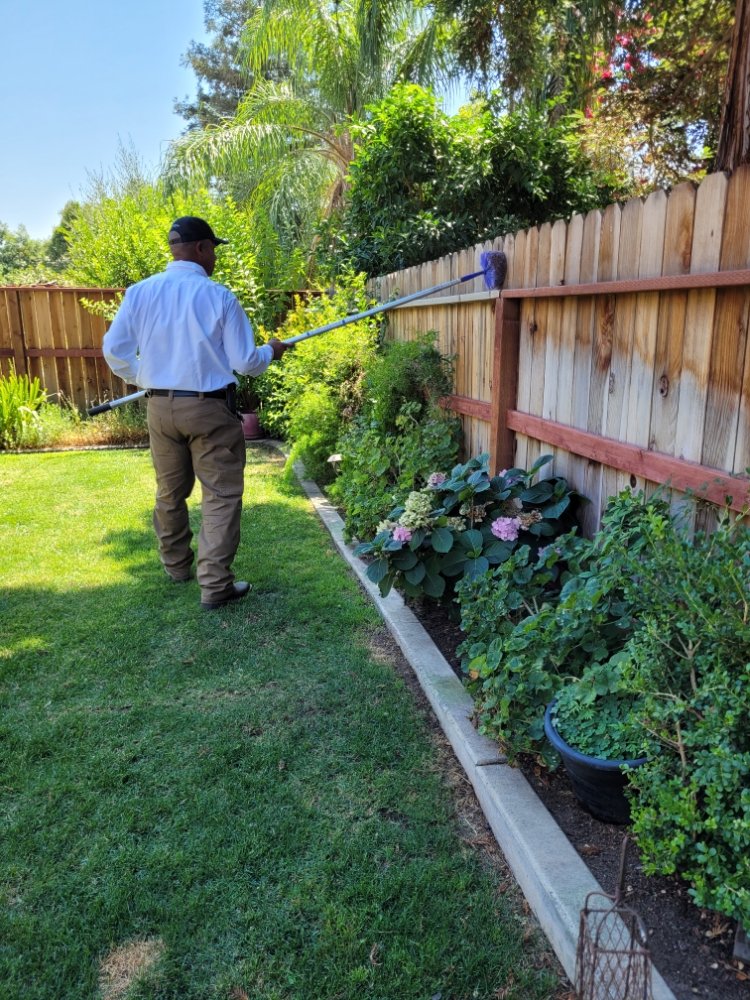
Lasting spider control starts with removing the reason they build webs: prey. Exterior lights with warm, insect-attracting spectrums should shift toward cooler LEDs, and lights can be aimed downward. Regular webbing removal collapses ongoing activity. Dusting eaves and stucco seams with a fine, labeled product creates a dry zone where spiders do not want to anchor webs. A broad, blind perimeter spray looks dramatic and does little by itself. I would rather spend twenty minutes on a ladder brushing, dusting junctions, treating door thresholds where crawling insects come in, and counseling on switchable lighting.
Expect a good service to include web removal every visit and adjustments in summer when insect pressure is highest.
Cockroach Control Requires Discipline
Nothing tests discipline like cockroaches in a busy kitchen. Panic sprays scatter them into deeper voids and taint bait stations. The better path is a cleanout protocol. Vacuum visible roaches and droppings with a HEPA unit, then place baits in cracks and crevices behind appliances, under sinks, and inside cabinet hinges. Dust wall voids carefully, and reserve residual sprays for baseboards after baits are down and protected.

Sanitation is not a scold, it is a treatment. A cockroach exterminator who skips grease tracks behind a stove will not win. I have crawled into too many toe kicks with a mirror and light to count. Even one spilled dog bowl that stays wet overnight will keep German roaches fed. Think dry at night, sealed containers, no cardboard nesting platforms, and minimal clutter on counters for at least two weeks during an active knockdown.
In multi-unit buildings, unit-to-unit spread is common through shared walls and plumbing chases. Coordinated service days across adjacent units shorten the timeline. Property managers who batch units every other week for a 6 to 8 week window give their techs the advantage.
Rodent Control Fresno CA: Exclusion First, Then the Rest
If you ask me for one rule, here it is. You cannot trap or bait your way past a hole. Exclusion is the whole game. Fresno construction leaves tempting points, especially at garage corners, roof returns, and around utility penetrations. I carry a mix of quarter-inch hardware cloth, steel wool that resists rust, and exterior-rated sealants. For larger gaps at roof lines, custom bent metal flashing or pre-fab covers save time.
Trapping beats baiting indoors. Snap traps and covered stations in garages, attics, and kitchens give you a fast read and a clean outcome. Bait outdoors in tamper-resistant stations along fence lines or back corners is acceptable if you monitor and place carefully, but it should not be the only plan. I have seen bait-heavy programs produce odor complaints because poisoned rodents die in inaccessible cavities. Communication helps prevent that.
Food storage is a blind spot. Birdseed and dog food in thin plastic tubs are rodent vending machines. Move them to metal cans with tight lids. If you hear gnawing in the wall or find droppings on shelf edges, do not wait. A two-night trapping run after sealing holes often clears activity before it becomes a population.
What Good Service Looks Like on Site
Top providers in pest control Fresno share certain traits during service. They show up on time within a window and call ahead. They ask about changes since the last visit. They carry a soft brush and remove webs as a matter of course. They check monitors, not just spray. They ask permission before entering sensitive rooms, wipe up residues, and leave a clear note or digital report with product names, targeted pests, and next steps.
They also make a plan that reflects your property. A tract home near Herndon and Milburn with fresh landscaping needs monthly service through the first summer, then can often settle into a 6 to 8 week cadence. A downtown restaurant with late hours and alley access may need weekly service until trends stabilize. A rental property with long gaps between tenants benefits from pre-move-in inspections with specific attention to roaches and rodents.
Pricing Without the Smoke and Mirrors
Pricing in Fresno is moderate compared to coastal metros. For single-family homes, a typical general pest service (ants, spiders, earwigs, occasional roaches) might start near the low hundred-dollar range for the first visit and drop to a lower recurring rate per visit on a bi-monthly plan. One-time specials exist, but beware of promises that a single spray will keep Argentine ants away all year. Seasonality and structure matter.
Cockroach cleanouts cost more because they take time, sometimes two to three visits. Rodent exclusion is variable. A simple garage door seal and two corner patches might be a small add-on, while roofline work and vippestcontrolfresno.com exterminator near me multiple utility penetrations can push into a more substantial project. Ask for a breakdown: inspection findings, labor, materials, and monitoring.
Avoid contracts that lock you into a year without an escape clause for non-performance. Most reputable companies will offer a service guarantee between visits and the ability to cancel with notice.
Safety and Environmental Considerations
People often ask whether professional products are safe for kids and pets. Properly applied, yes. The risk lives in misuse and over-application. The industry has shifted strongly toward targeted baits and non-repellent residuals with low volatility. Indoors, gels and dusts in voids minimize exposure. Outdoors, crack and crevice applications keep product where pests travel instead of broadcasting it across soil.
If you keep pollinators, mention it. A good tech will avoid treating blooming plants and can schedule services for times when bees are less active. If you are sensitive to odors, ask for water-based formulations and indoor bait-first approaches. Communication solves most concerns.
How to Prepare for a Service Visit
A little preparation goes a long way. Clear the baseboards by a few inches, especially in kitchens and baths. Pull small appliances forward if you suspect roaches, and empty under-sink cabinets if you can. Trim shrubs and pull mulch back so the tech can access foundation lines. Secure pets or take them for a walk during treatment. If rodent work is on the agenda, gather a list of nightly sounds and locations where you have seen droppings or nesting. That timeline helps the tech place traps efficiently.
DIY Works Best as Maintenance
I am not against DIY. I would rather a client run with good habits between visits than rely solely on us. Keep a small gel bait in the junk drawer for a surprise ant trail. Use a hand duster with diatomaceous earth or a labeled dust for baseboard gaps you can access safely. Vacuum webs with a soft brush regularly. Swap porch bulbs to cooler spectrums. Seal what you can reach with a caulk gun. All of that lowers the pressure so professional visits do the finer work.
The trap is overconfidence with repellents. If you spray something that smells strong along a trail of ants, do not be surprised when they pop out in the pantry the next day. Argentine ants spread under pressure. Slow and quiet wins.
Case Notes From the Valley
A family off Willow and Teague had recurring ants every spring. Three different companies had sprayed the perimeter for two seasons without lasting results. On inspection, two sprinkler heads soaked the slab, and the weep screed sat below grade in one section where the lawn crept up. We lifted the grade line, moved the heads, sealed a hairline crack under a back door, and ran a bait-first program for six weeks. Ant activity dropped to zero, and they shifted to a maintenance schedule. Most of the fix was a shovel and patience.
A small coffee shop near downtown battled German cockroaches for months. They treated monthly, but saw them at the grinder late at night. The issue turned out to be a cluttered back storage area with cardboard and a wall gap behind a three-compartment sink. We pulled the clutter, installed a metal escutcheon around the drain line, vacuumed, baited hinges and drawer slides, and set sticky monitors. Two follow-ups later, monitors showed single-digit counts, then none. They stayed on a weekly exterior service with interior inspections, and six months later passed their health inspection with compliments on documentation.
A rental duplex saw rats in the attic every winter. The owner had paid for bait stations for years. We crawled the roofline and found a half-inch gap along two return eaves and a torn gable vent screen. Two hours of exclusion and a week of interior trapping later, no more activity. Their ongoing spend dropped because the source was solved.
Choosing an Exterminator Fresno Residents Can Rely On
You do not have to chase perfection. Aim for a partner who listens, explains, and shows their work. If a company can articulate a Fresno-specific plan for your pests, uses baits and targeted products before broad sprays, and builds in exclusion and monitoring, you are on the right track. Read reviews for comments about communication and follow-up, not just quick kills. Ask neighbors what has worked on your street. Blocks with the same builder often share the same entry points and quirks.
Whether you are typing exterminator near me after seeing a line of ants in the kitchen, hunting for the best pest control Fresno for a restaurant opening, or finally tackling rodent control Fresno CA after a winter of scratching in the walls, the fundamentals do not change. Inspect with care. Exclude what you can. Treat precisely. Monitor and adjust. Fresno’s climate gives pests a long runway. With a thoughtful plan and a steady hand, you can shorten it dramatically and keep your home or business clean, quiet, and safe year round.